garment shop billing software for size, colour and article-wise stock
A garment shop does not sell shirts. It sells a 40 in navy. RetailDek holds stock the way you buy it — article, size and colour — puts each piece on the right side of the ₹2,500 apparel GST line, and keeps alteration jobs from disappearing into the festive rush.
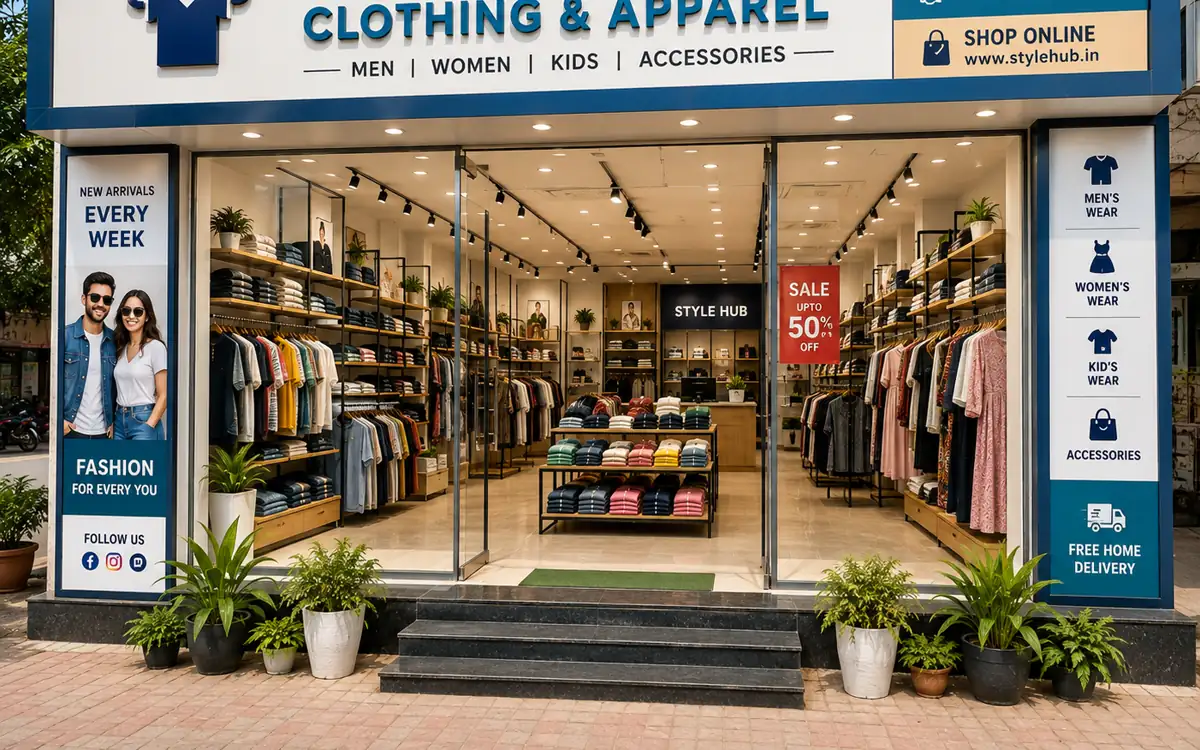
Challenges in garment shops
The everyday problems this trade knows too well.
One article becomes thirty stock lines
Six sizes across five colours from a single design. The rack tells you something is left; it never tells you the 40 navy everybody asks for went last Tuesday.
The ₹2,500 line moves the tax
Since 22 September 2025 a kurta at ₹2,400 and the same design at ₹2,800 do not carry the same rate. Judging that on the spot, piece by piece, is how filing goes wrong.
Alterations promised for Saturday
A chit pinned to the garment, a name nobody can read, and a customer at the door on Saturday evening. The piece is somewhere in the shop and so is the money.
Festive weeks run at double speed
Three people bill at once through Diwali and the wedding season. Whatever was written by hand in that week is the first thing to stop matching.
How RetailDek fits
The real features that solve the way garment shops actually work.
Article, size and colour as real stock
Each size-and-colour combination is its own item with its own barcode and live quantity, so you can see that 40 navy is finished while 42 navy is still hanging.
Tags printed in your own shop
Generate and print barcode labels for every variant, so a scan at the counter brings up the exact article, size and price instead of an argument over a faded tag.
The ₹2,500 apparel split, per piece
Under the rates effective 22 September 2025, apparel at or below ₹2,500 a piece is taxed at 5% and anything above it at 18%. Each item carries its own rate and HSN code, so a mixed bill splits CGST/SGST and rounds off correctly.
Alteration jobs that stay on record
Take the alteration as an order against the customer, reserve the piece so nobody sells it off the rack, and turn it into a GST invoice on the day it is collected.
Article-wise numbers before you rebuy
Reports show which articles, sizes and colours actually cleared, so the next order to the wholesaler is built on what sold rather than on what the rack looks like.
A day in the shop
How a typical day flows with RetailDek.
Build the article matrix
Import each design's size and colour variants from Excel with HSN codes, MRP and opening stock, then print a barcode tag for every piece.
Scan, bill, take the alteration
Scan the tag and the piece drops onto the bill at its own GST rate. If it needs altering, raise an order, reserve the piece and set the delivery day.
Close the day, refill the sizes
Each cashier closes their shift with counted cash checked against sales, and article-wise reports tell you which sizes to bring back before the next weekend.
Built around your counter
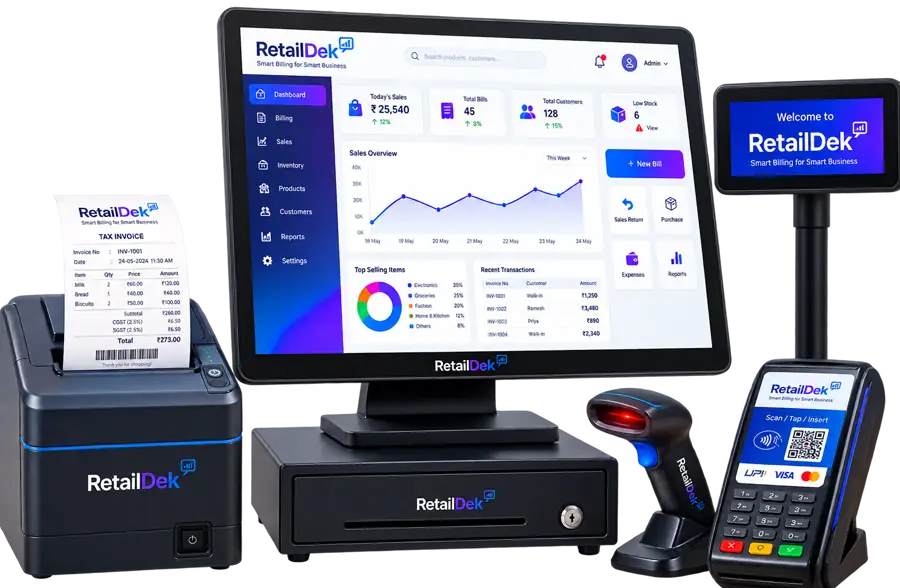
A quick look at how garment shops come together on screen — clear totals, live figures, and nothing to re-key.
- Article, size and colour as real stock
- Tags printed in your own shop
- The ₹2,500 apparel split, per piece
Features that matter most here
The parts of RetailDek garment shops lean on every day.
Garment Shops — FAQs
Answers to the questions owners in this trade ask most.
Every size-and-colour combination is created as its own item with a distinct barcode and its own live quantity, so a single article is tracked as the thirty real stock lines it actually is.
Run your garment shops on RetailDek
Start free and see it running with your own shop's data in minutes.