mobile repair shop software for job cards and spare parts
Take a handset in against its IMEI, quote the repair, get the customer's yes, issue the spare from stock and hand the phone back on a proper GST bill. RetailDek keeps every job, part and payment on one record instead of a spike of slips.

Challenges in mobile repair shops
The everyday problems this trade knows too well.
Handsets in, slips everywhere
A phone arrives on a torn page with a name and a fault. Two days later nobody remembers which charger came with it, what was quoted, or who said go ahead.
Spares disappear quietly
Displays, batteries and flex cables are small, costly and easy to misplace. With no live count you learn a part is missing only when the customer is standing at the counter.
The estimate and the bill disagree
You said ₹1,800 on the phone, the final bill reads ₹2,400. Nothing was written down, so the argument happens at delivery — every single time.
Repair warranty runs on memory
The same handset returns in three weeks with the same fault. Was it inside your repair warranty? Without the original job on record you either refund blind or lose a regular.
How RetailDek fits
The real features that solve the way mobile repair shops actually work.
One record per handset, IMEI included
Book each intake as its own document carrying the customer, model, IMEI and reported fault, so every phone on the bench is traceable from counter to delivery.
Estimate first, approval on file
Raise a quotation for the diagnosed work and convert it to a GST invoice only once the customer agrees, so the approved figure and the billed figure are the same figure.
Spare-parts stock that moves with the job
Displays, batteries, connectors and back panels are items with live quantity. Billing one out deducts it; a purchase from your supplier puts it back and captures the input tax.
Parts and labour on one GST bill
Put the spare and the service charge on the same invoice, each with its own HSN and rate, and let the place of supply decide the CGST/SGST or IGST split.
Repeat-fault claims you can verify
Past repairs stay searchable in reports and on the customer's party ledger, so you can confirm what was replaced and when before honouring a claim.
A day in the shop
How a typical day flows with RetailDek.
Book the handset in
Record the customer, model, IMEI, reported fault and the accessories handed over, so the phone has one document instead of a slip.
Quote and wait for a yes
Raise the estimate covering parts plus labour, show it to the customer, and convert it the moment they approve — nothing gets typed twice.
Fit, bill and hand over
Issuing the spare deducts stock and closes the job on a GST invoice; the payment lands on the ledger and the activity log holds the whole trail.
Built around your counter
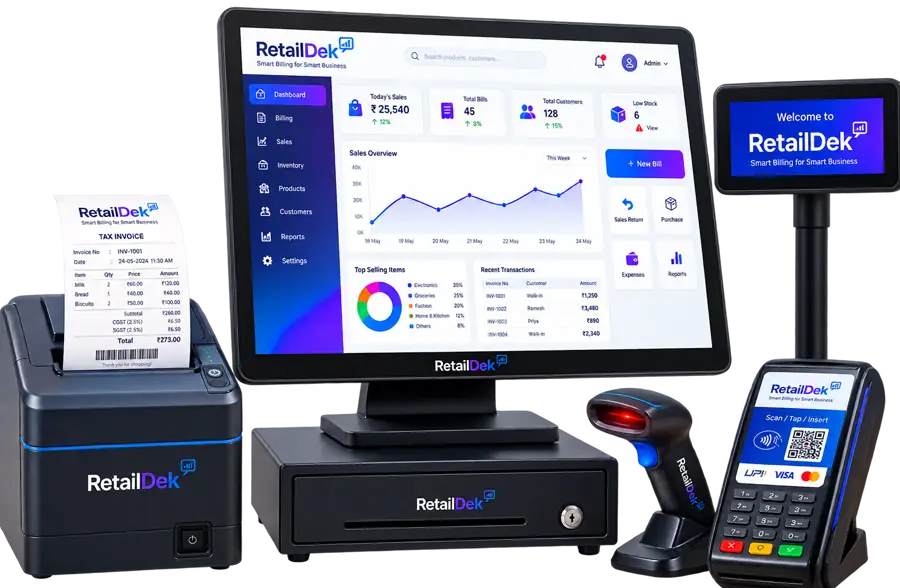
A quick look at how mobile repair shops come together on screen — clear totals, live figures, and nothing to re-key.
- One record per handset, IMEI included
- Estimate first, approval on file
- Spare-parts stock that moves with the job
Features that matter most here
The parts of RetailDek mobile repair shops lean on every day.
Mobile Repair Shops — FAQs
Answers to the questions owners in this trade ask most.
Yes. You can open a job record per handset with its IMEI and fault, quote the repair, keep spare-parts stock live, and close it on a GST invoice carrying both the part and the labour.
Run your mobile repair shops on RetailDek
Start free and see it running with your own shop's data in minutes.